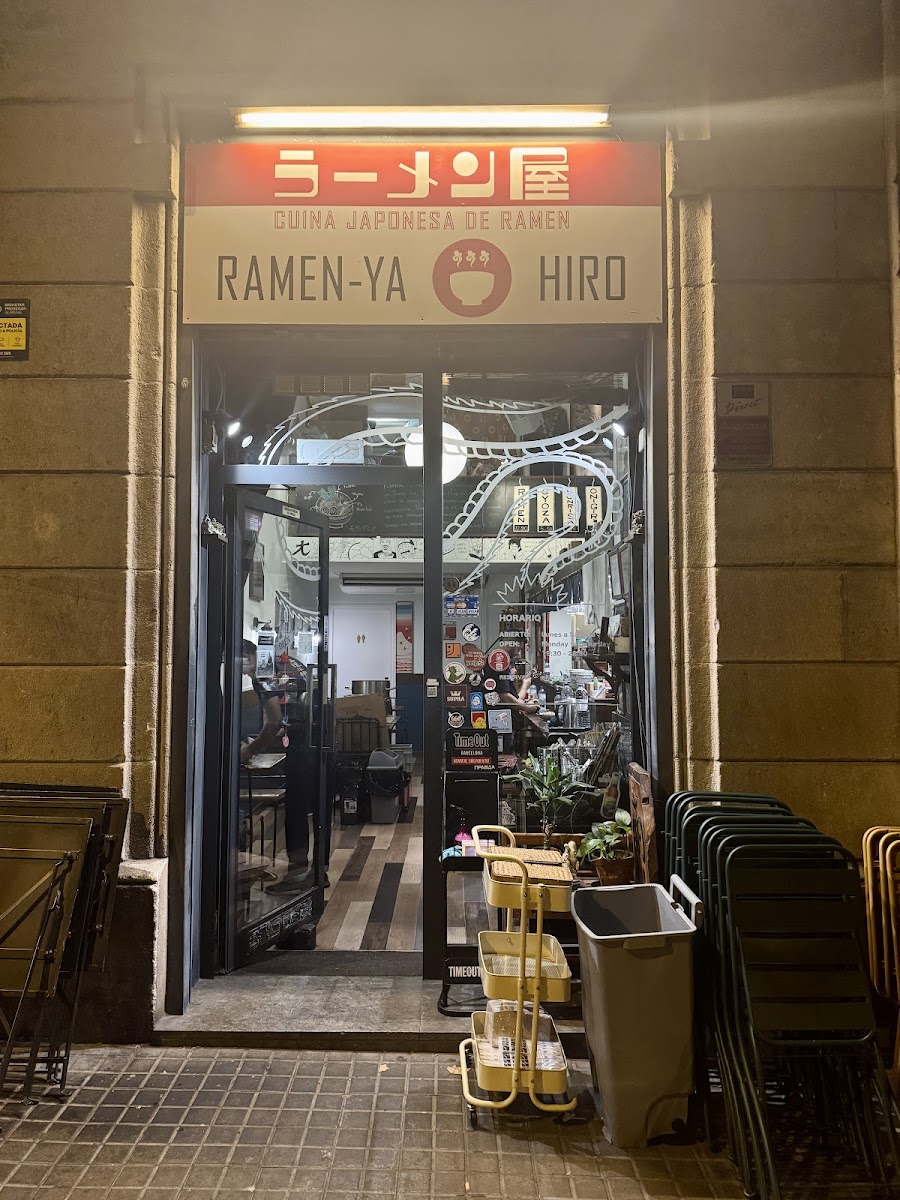
Ramen-ya Hiro is an amazing find in Barcelona. The restaurant is small but food is excellent. The owner chef of the place is Japanese, so the ramen tastes authentically Japanese. Serving staff is polite. Even Japanese get their ramen food there.
Overview
Tucked away at Carrer de Girona, 164, Local 2, Eixample, 08037 Barcelona, Spain, Ramen-Ya Hiro - Restaurant Japonés feels like the kind of place you discover once and then quietly recommend to close friends. I first visited on a rainy weekday evening after hearing several glowing reviews from local food bloggers and Japanese expats living in Barcelona. The small dining room was already buzzing, which, in my experience, is always a promising sign for a ramen spot.
The menu is focused and confident, built around traditional Japanese ramen bowls, gyoza, and a few rice dishes. That focus matters. According to the Japanese Ministry of Agriculture, authentic ramen relies on four essential components: broth, tare (seasoning base), noodles, and toppings. At Ramen-Ya Hiro, you can taste that balance immediately. I ordered the tonkotsu ramen, a pork bone broth that had clearly been simmered for hours. The texture was creamy without being heavy, and the umami depth lingered long after the first spoonful. It reminded me of a small ramen shop I once visited in Fukuoka, where the chef explained how collagen extraction from pork bones gives tonkotsu its signature body.
The noodles, slightly firm and elastic, were another highlight. Proper ramen noodles contain kansui, an alkaline mineral water that gives them their characteristic chew and yellow hue. Food scientists often point out that kansui changes the pH of the dough, strengthening gluten and improving texture. You can feel that craftsmanship here. The noodles don’t turn soggy halfway through the bowl, which is a common issue in less experienced kitchens.
Beyond tonkotsu, the miso ramen deserves attention. The miso base delivers a deeper, slightly sweet complexity. Miso itself, as studied by nutrition researchers in Japan, contains probiotics that can support gut health when unpasteurized. While not every bowl guarantees live cultures due to cooking temperatures, it’s still reassuring to know that this fermented soybean paste carries nutritional heritage. Paired with chashu pork that’s tender but not overly fatty, plus marinated soft-boiled egg with a jammy center, the bowl feels both indulgent and thoughtfully composed.
What stands out most is consistency. I’ve returned several times over the past year, sometimes with colleagues from the food industry. One friend, a culinary school graduate specializing in Asian cuisine, commented on the broth’s clarity and lack of excessive salt-something that often masks weak stock preparation. Here, the flavors feel layered rather than loud. That kind of restraint signals confidence.
The service is informal but attentive. Staff members are quick to explain the differences between shoyu, shio, and miso bases if you’re unsure what to order. On one visit, I noticed a server guiding a first-time diner through spice levels and portion sizes, which made the experience feel welcoming rather than intimidating. For a Japanese restaurant in Barcelona’s Eixample district, that cultural bridge is important.
Location-wise, being in Eixample makes it accessible from most parts of the city. It’s a short walk from major avenues and well connected by public transport. The dining space isn’t huge, so waiting times during peak hours are common. That said, the turnover is efficient. If you’re planning a weekend dinner, arriving early or booking ahead is wise.
Online reviews consistently highlight authenticity and flavor depth. While no restaurant is perfect-occasionally the wait can stretch longer than expected during busy nights-the overall experience remains reliable. Prices are reasonable for Barcelona standards, especially considering the quality of ingredients and the evident care in preparation.
In a city packed with tapas bars and Mediterranean menus, finding a Japanese ramen house that respects tradition while adapting to a local audience isn’t easy. Yet here, the process feels deliberate: long-simmered broth, carefully seasoned tare, properly prepared noodles, and balanced toppings. For anyone serious about ramen, or simply craving a comforting bowl of Japanese soup in Barcelona, this spot delivers a satisfying and credible experience grounded in technique and taste.
Good to know
Service options
✓ Outdoor seating ✓ Delivery ✓ Takeaway ✓ Dine-inHighlights
✓ Great tea selectionPopular for
✓ Lunch ✓ Dinner ✓ Solo diningAccessibility
✓ Wheelchair-accessible seating ✓ Wheelchair-accessible toilet ✓ Assistive hearing loop ✓ Wheelchair-accessible car park ✓ Wheelchair-accessible entranceOfferings
✓ Alcohol ✓ Beer ✓ Coffee ✓ Healthy options ✓ Late-night food ✓ Organic dishes ✓ Salad bar ✓ Spirits ✓ WineDining options
✓ Lunch ✓ Dinner ✓ Counter service ✓ Dessert ✓ Seating ✓ Table serviceAmenities
✓ Bar on site ✓ Gender-neutral toilets ✓ ToiletAtmosphere
✓ Casual ✓ Cosy ✓ TrendyCrowd
✓ Family friendly ✓ LGBTQ+ friendly ✓ Tourists ✓ Transgender safe space ✓ University studentsPlanning
✓ Lunch reservations recommended ✓ Dinner reservations recommended ✓ Accepts reservations ✓ Usually a waitPayments
✓ Credit cards ✓ Debit cards ✓ NFC mobile payments ✓ Credit cardsChildren
✓ Good for kids ✓ High chairsParking
✓ Paid parking lot ✓ Paid street parkingPhotos
1 / 4
Location
Reviews
- No ratings yet 5832 reviews
Ive tried 5 ramen bars in BCN and so far this is the closest to original taste. I ordered Miso since I like creamy ramen, it’s not really salty so I was able to finish the whole bowl. Price was reasonable too. You can walk it but you have to be wait since the queue might be long, so better to make a reservation.
Great find. Delicious lunch menu and very reasonable prices. Cool t-shirts too.
I went there at 13:00 noon. The restaurant was quite busy and the menu was very limited, but the ramen and dumplings tasted good. I highly recommend it.
Took a while to get a seat, but it was worth the wait. The menu was simple and the restaurant was very cozy similar to the ramen shops in Japan. Despite being very busy, service was pretty good and I even got to have a pleasant chat with the chef (who I also assume is the owner). Please give this ramen shop a chance whenever you are in the area!